10/12 Pitch Roof Area Calculator
Find the true surface area of a 10/12 Pitch roof. This pitch has a slope factor of 1.302, so enter your footprint dimensions and the calculator applies the multiplier automatically.
- Roof Angle
- 26.6°
- Slope Factor (Multiplier)
- 1.118
- Roof Category
- Standard Slope (4–6/12)
Enter your values and press Calculate to see your result.
About 10/12 Pitch Roofs
A 10/12 roof pitch is very steep. This style is often seen in Victorian homes and large modern farmhouse designs, adding significant surface area.
When calculating the surface area of a 10/12 Pitch roof, the pitch multiplier is essential to find the true square footage compared to a flat footprint. Our calculator automatically applies this multiplier based on the pitch you selected.
How the Roof Pitch Calculator | Angle & Slope Multiplier Works
Follow the exact steps to get your result instantly and privately.
Step 1: Measure Rise
Find the vertical distance your roof climbs.
Step 2: Measure Run
Find the horizontal distance (usually 12 inches).
Step 3: Calculate
Get the pitch factor and exact angle.
Step 1: Measure Rise
Find the vertical distance your roof climbs.

How to calculate Roof Pitch
Roof pitch is simply the ratio of rise over run.
Measuring Methods
- The Footprint Estimation (Quickest): If you need a rough estimate, multiply the length of your home by its width to find the footprint, then apply a pitch multiplier based on your roof's steepness.
- Manual Measurement (Most Accurate): For complex shapes with valleys, hips, or dormers, sketch your roof and divide it into simple geometric shapes (rectangles, triangles). Calculate each section's area and sum them up.
- Digital Measurement Tools: Use satellite mapping tools to outline your roof from an aerial view. This gives you a fairly accurate square footage estimate without needing to climb a ladder.
Pitch = Rise / Run
Angle = arctan(Rise / Run)If you have a 40 × 30 ft house with a 1 ft overhang and a 6/12 gable roof: the footprint is 42 × 32 = 1,344 sq ft. The slope factor is 1.118. The raw area is 1,344 × 1.118 ≈ 1,502 sq ft. Adding a standard 10% waste brings it to 1,652 sq ft. That converts to 17 squares, or 51 shingle bundles.
Worked examples
Understanding how the math applies to real-life roofing scenarios can help you plan your materials effectively. Below, we break down several common home styles and roof types—from a simple shed dormer to a sprawling colonial. By seeing how footprint size, roof slope, and waste factor combine, you can estimate your own project with confidence.

| Scenario | Calculation | Result |
|---|---|---|
| House A — small ranch, 50 × 28 ft, 4/12 gable | Footprint 52 × 30 = 1,560 sq ft × 1.054 slope × 1.10 waste | 1,809 sq ft → 19 squares, 57 bundles |
| House B — large colonial, 60 × 40 ft, 9/12 gable | Footprint 63 × 43 = 2,709 sq ft × 1.250 slope × 1.10 waste | 3,725 sq ft → 38 squares, 114 bundles |
| House C — hip bungalow, 36 × 36 ft, 6/12 hip | Footprint 40 × 40 = 1,600 sq ft × 1.118 slope × 1.15 hip waste | 2,057 sq ft → 21 squares, 63 bundles |
| Project D — shed dormer, 24 × 14 ft, 3/12 shed | Footprint 26 × 16 = 416 sq ft ÷ 2 (single slope) × 1.031 × 1.10 waste | 236 sq ft → 3 squares, 9 bundles |
| Project E — two-section complex, 45 × 30 ft, 8/12 gable | Footprint 47 × 32 = 1,504 sq ft × 1.202 slope × 2 sections × 1.20 waste | 4,339 sq ft → 44 squares, 132 bundles |
Conversion reference
A steeper roof dramatically increases the actual surface area you need to cover without changing your home's footprint. The slope factor translates your flat ground measurements into true sloped dimensions. For example, upgrading from a flat roof to a 12/12 pitch adds over 40% more surface area.
Most standard residential homes feature a roof pitch between 4/12 and 9/12. If you are replacing a roof in this range, you can expect the slope factor to add roughly 5% to 25% more surface area compared to the flat footprint of your house.
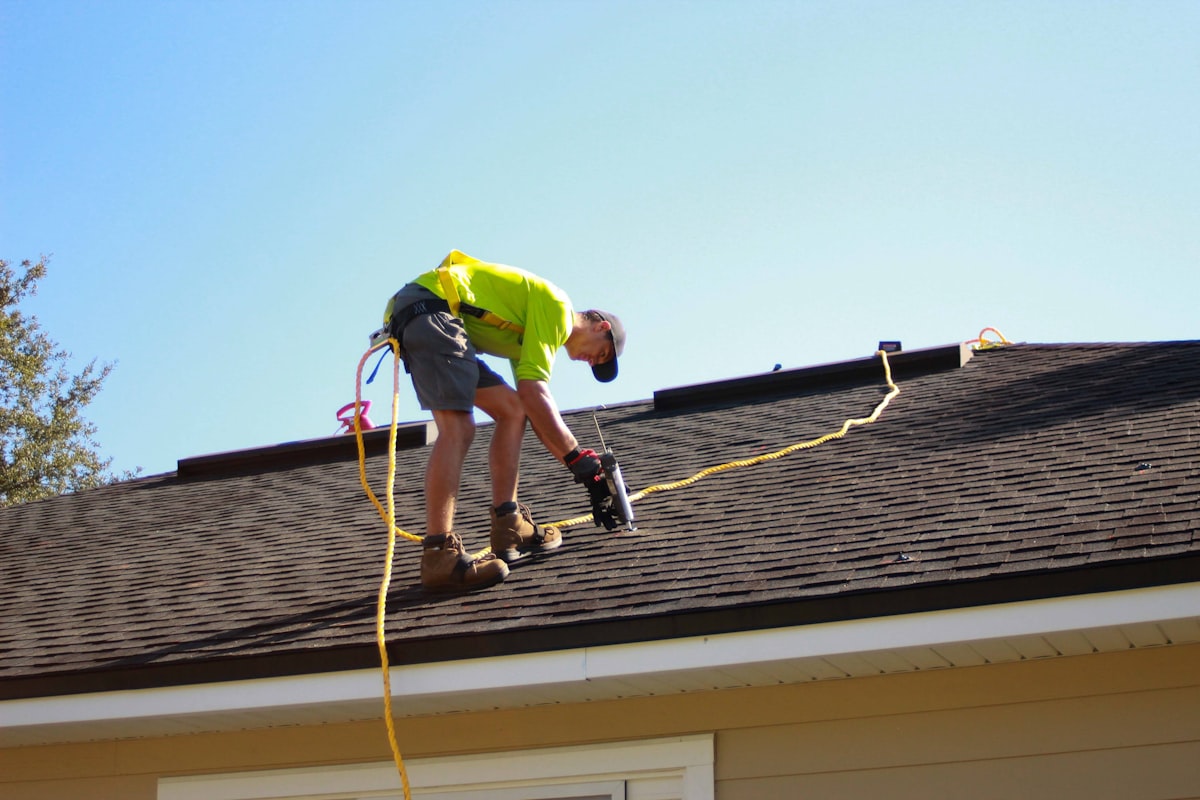
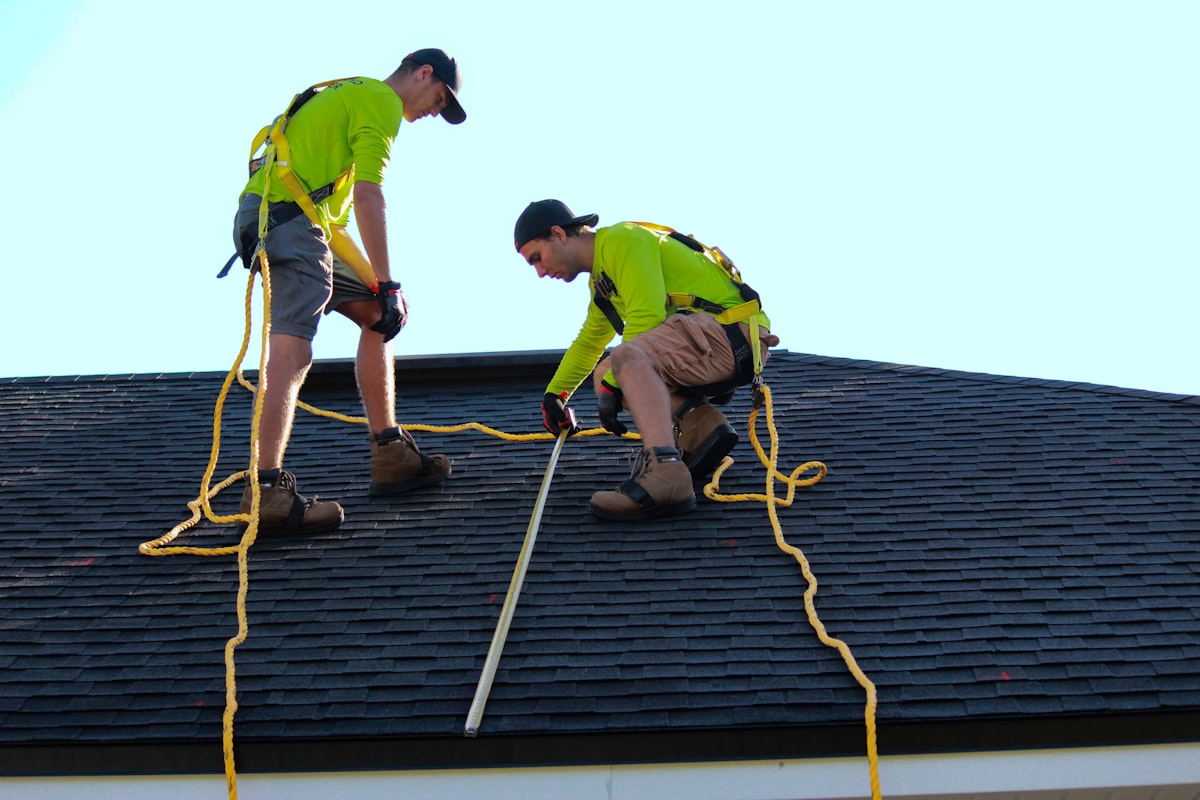
Safety and labor costs also rise with pitch. Roofs steeper than 7/12 are typically considered 'non-walkable' by contractors. This means roofers will need to install roof jacks, toe boards, and use safety harnesses, which can significantly increase labor charges. Understanding your pitch helps you anticipate these added expenses.
Use this reference table to see exactly how your chosen pitch impacts the materials required. Simply multiply your home's flat footprint by the slope factor corresponding to your roof's pitch to find the true surface area.
| Pitch | Slope Factor | Angle | 1,000 sq ft Footprint → Roof Area |
|---|---|---|---|
| 0/12 | 1.000 | 0.0° | 1,000 sq ft |
| 1/12 | 1.003 | 4.8° | 1,003 sq ft |
| 2/12 | 1.014 | 9.5° | 1,014 sq ft |
| 3/12 | 1.031 | 14.0° | 1,031 sq ft |
| 4/12 | 1.054 | 18.4° | 1,054 sq ft |
| 5/12 | 1.083 | 22.6° | 1,083 sq ft |
| 6/12 | 1.118 | 26.6° | 1,118 sq ft |
| 7/12 | 1.158 | 30.3° | 1,158 sq ft |
| 8/12 | 1.202 | 33.7° | 1,202 sq ft |
| 9/12 | 1.250 | 36.9° | 1,250 sq ft |
| 10/12 | 1.302 | 39.8° | 1,302 sq ft |
| 11/12 | 1.357 | 42.5° | 1,357 sq ft |
| 12/12 | 1.414 | 45.0° | 1,414 sq ft |
Quick facts
- Slope factor (pitch multiplier): 1.302.
- Roof area is about 30% larger than the flat footprint.
- Roof angle: about 39.8° from horizontal.
- Walkability: Very steep — not safely walkable without staging and fall protection.
- Standard slope — compatible with most shingle and panel systems.
Frequently Asked Questions
Clear answers about roof square footage calculations, pitch slope factors, shingle bundles, and ordering materials.
A 10/12 Pitch roof has a slope factor (pitch multiplier) of 1.302. You find it as the square root of 1 + (rise ÷ 12)², which for a 10/12 pitch equals 1.302. Multiply your flat footprint area by 1.302 to get the true sloped roof area.
That means the actual roof surface is about 30% larger than the flat footprint it covers. For example, a 1,500 sq ft footprint under a 10/12 Pitch roof has about 1,953 sq ft of actual roof surface to cover.
A 10/12 Pitch rises 10 inches for every 12 inches of horizontal run, which works out to about 39.8 degrees from horizontal.
Very steep — not safely walkable without staging and fall protection. Contractors will price in scaffolding, harnesses, and extra time for a slope this steep.
Still have questions about your roof takeoff?
Explore our comprehensive suite of specialized calculators or contact our estimator team for personalized guidance.