How Much Roofing Waste Factor Should You Order?
Stop guessing how much extra roofing material to order. Learn exact waste factor percentages for gable, hip, and complex roofs to avoid running short.
You have measured the footprint, checked the pitch, and calculated the exact surface area. But if you order exactly that amount of material, you are going to run out. Guaranteed.
Every roofing job generates waste. Getting the waste factor wrong leaves you with too much costly leftover material, or worse, scrambling to buy a few extra bundles mid-job that might not match the original color.
The question is not if you need a waste factor, but exactly how much. Let's look at the numbers.
What is a Waste Factor?
A waste factor is an extra percentage of material added to your total order to account for offcuts, overlaps, and human error during installation. Use our interactive calculator below to test different roof surface dimensions and apply custom waste margins automatically:
Shingles Calculator
Use this shingles calculator to find out the number of shingles required for a certain roof area. You can configure shingle dimensions and apply other filters like overlapping, per pack, and estimated losses.
- Estimated Packs
- 9 packs
- Effective Area per Shingle
- 784 sq in
- Waste Factor Used
- 10%
Enter your values and press Calculate to see your result.
Wooden Materials Calculator
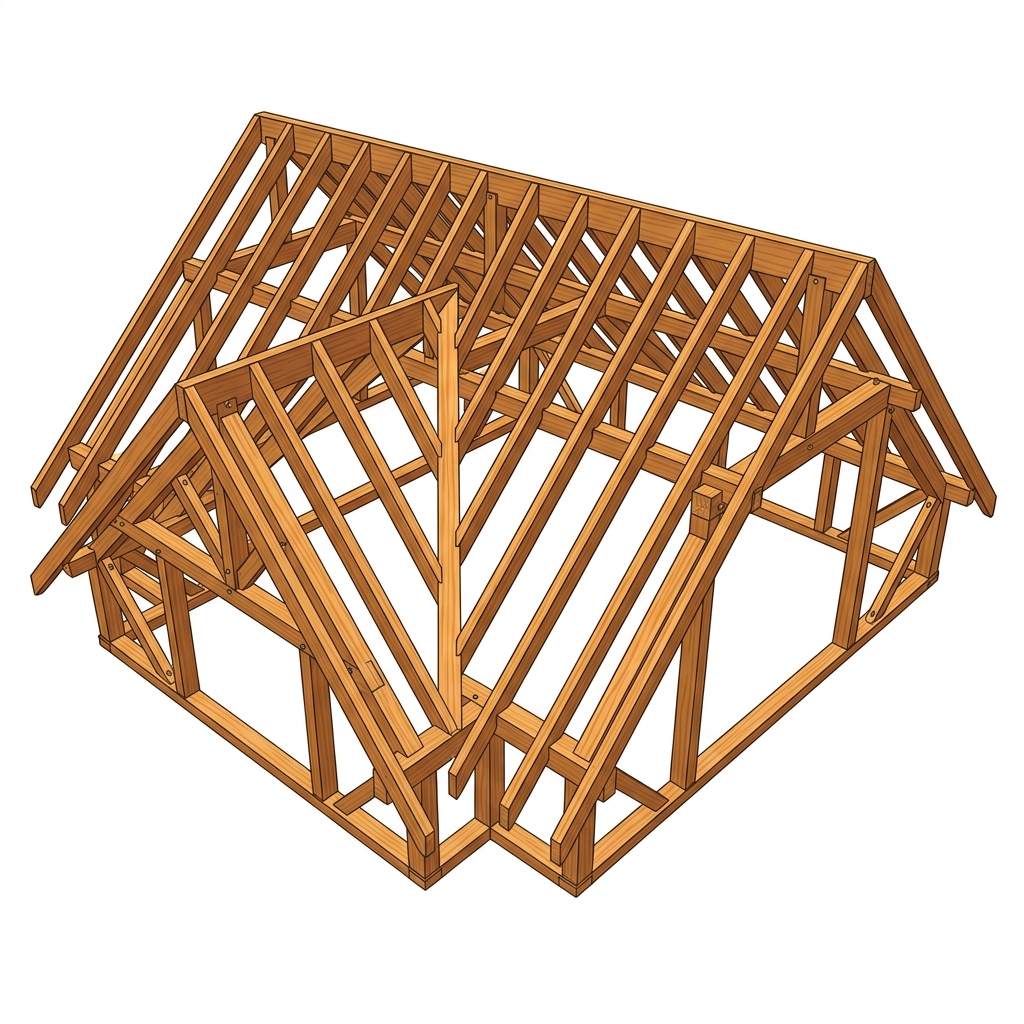
Calculate traditional wooden roof structural components including main beams, secondary beams, roofing board, membrane, and nails.
- Main Beams (10x10x400cm)
- 75 pieces
- Secondary Beams (2.5x5x400cm)
- 1.00 m³ or 200 pieces
- Roofing Board (2.5cm thick)
- 5.00 m³
- Roofing Membrane
- 200 m²
- Roof Nails (7cm)
- 10.0 kg
- Roof Nails (10cm)
- 16.0 kg
Enter your values and press Calculate to see your result.
Shingles are rectangular. Roofs, however, have diagonal hips, sloped valleys, and protruding vents. Every time a roofer reaches an edge or a valley, they must cut a shingle to fit. The cutoff piece is usually tossed in the dumpster. That discarded piece is your waste.
Standard Waste Factor Guidelines
The amount of waste you will generate depends entirely on the complexity of your roof's shape. Here is the reality of the math:
| Roof Complexity | Recommended Waste Factor | Typical Characteristics |
|---|---|---|
| Simple / Gable | 10% | Two sloping sides, a central ridge, flat ends, no valleys. |
| Moderate / Hip | 15% | Slopes on all four sides, requiring diagonal cuts along the hips. |
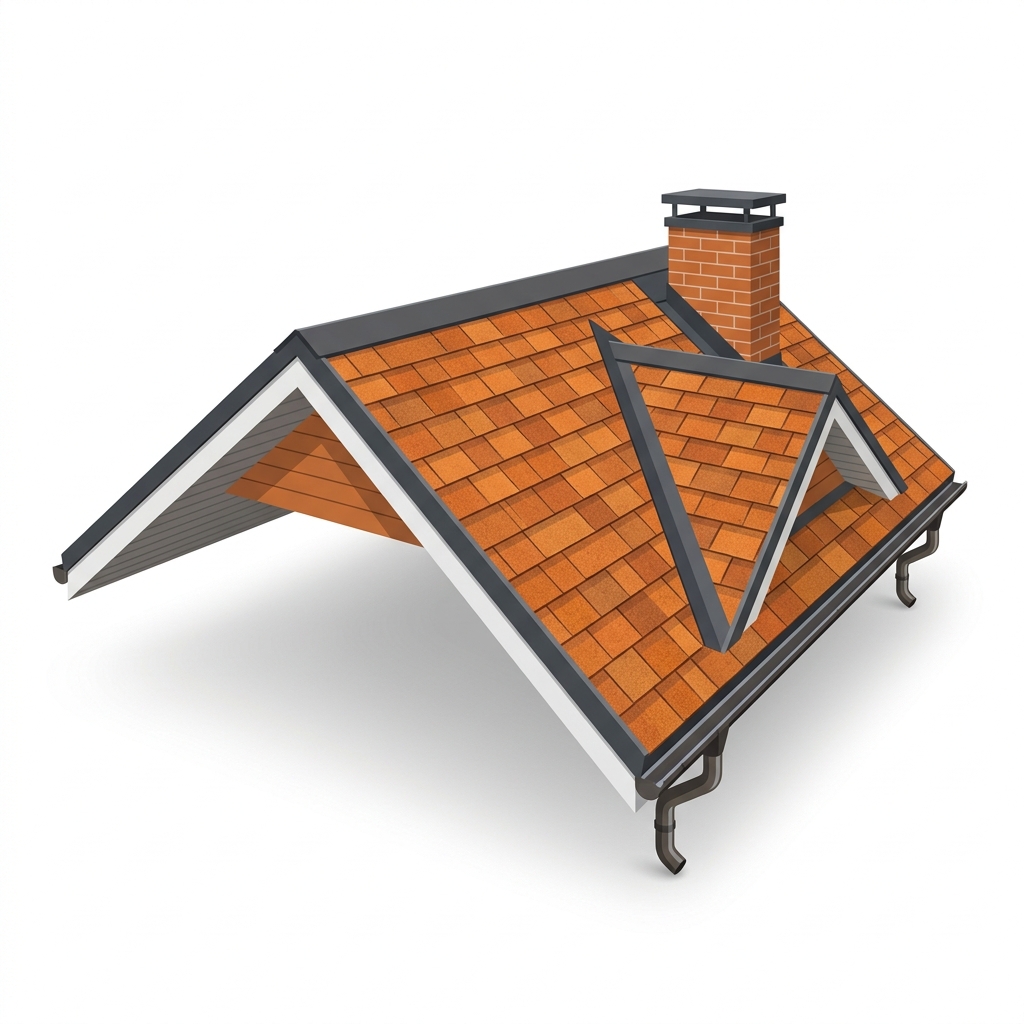
| Complex | 20%+ | Multiple intersecting planes, valleys, dormers, skylights, and chimneys. |
10% Waste: Simple Gable Roofs
If your roof is a standard gable (an inverted "V" shape) or a single-slope shed roof, there is very little cutting required. The only significant waste occurs at the rake edges and the ridge. A 10% buffer is sufficient.
15% Waste: Hip Roofs
A hip roof slopes downward on all four sides, creating four diagonal ridges (hips) running from the peak to the corners. Shingles must be cut at an angle along every single one of these hips. Because of this extensive diagonal cutting, a 15% waste factor is mandatory.
20%+ Waste: Complex Roofs
If your house has multiple intersecting roof planes, valleys, dormer windows, skylights, or chimneys, the waste skyrockets. Every valley requires overlapping and angled cuts. For highly complex roofs, a 20% waste factor is standard, and sometimes even 25% is necessary.
Starter Strips and Ridge Caps
When using our calculators, you do not need to bloat your waste factor to account for starter strips and ridge caps.
Our tools automatically separate these into dedicated linear-foot measurements. This way, you can order the exact bundles needed for the perimeter and peaks, keeping your primary shingle waste factor accurate. Just select the waste factor that matches your roof type in the dropdown, and we handle the math.
Ready to run the numbers?
Get your result instantly — private, in your browser.